Useful quality control starts with a shared definition of the product. Without an approved specification, sample and acceptance criteria, a checklist can record activity without confirming whether the output meets your requirements.
Start before the production line
Align the model reference, electrical specification, port layout, plug, materials, color, marking and packaging before bulk production. If a sample is part of the order process, identify the approved sample and any permitted differences. Artwork revisions should be equally clear.
The AmpLoom supply catalog documents eight production stages, from SMT placement to packaging and shipping. They provide a useful map for quality discussions—not a claim that every product follows an identical sequence or test scope. The exact workflow and inspection plan are aligned to the selected product and order.
Turn each stage into three questions
What is checked? Which acceptance criteria apply? What evidence will be recorded? If those answers are clear, the production workflow becomes much more useful to a buyer.
The eight production stages, from a buyer’s perspective
- 01
SMT placement
Surface-mount technology (SMT) placement positions electronic components on the circuit board. For a sourcing discussion, the useful questions concern the approved board revision, component placement and the checks used around the placement and soldering process. Any specific inspection criteria should be agreed rather than assumed from the stage name.
- 02
DIP
DIP is the stage associated with inserting and soldering through-hole components. Depending on the product, buyers can ask how component orientation, solder workmanship and the relevant assembly revision are checked. Define any order-specific workmanship reference before production.
- 03
Post-soldering test
A check after soldering can identify issues before later assembly makes access more difficult. Ask which tests are performed at this point, whether every unit or a sample is checked, and how failures are handled. The applicable electrical parameters and limits belong in the product-specific test scope.
- 04
Assembly test
Once the product has been assembled, testing can be aligned to the final configuration. Depending on the agreed plan, this may involve checking charging behavior, ports, fit or visible workmanship. Record the approved output reference and distinguish functional checks from cosmetic inspection.
- 05
Aging test
An aging test evaluates operation over a defined period and under defined conditions. “Aging tested” is incomplete without the duration, load or operating conditions, sample coverage and pass criteria. If aging is important for your order, confirm those details in advance.
- 06
ATE testing
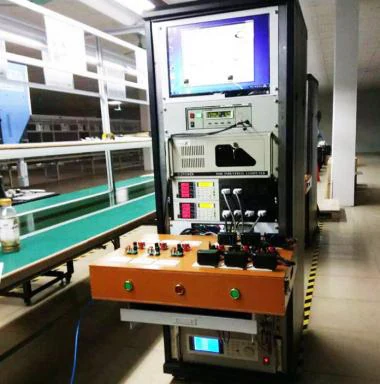
Automated test equipment (ATE) can support repeatable electrical checks, but the equipment name alone says little about coverage. Ask for the applicable test items, limits and record format for the selected model. Align the test setup with the output specification approved for the order.
- 07
Laser engraving and marking
Marking connects the physical product to the approved artwork and identification requirements. Check content, position, orientation, color or appearance where relevant, and make sure rating-label information matches the agreed configuration. An approved visual reference helps prevent avoidable variation.
- 08
Packaging and shipping
Packaging is also a quality checkpoint. Align retail packaging, protective materials, accessories, labels, quantities, carton marks and shipping details. Where a final inspection is agreed, clarify whether it covers product quality, packaging, quantity or all three.
Define the evidence, not just the activity
A photograph of equipment can show a production environment, but it does not demonstrate that your order passed a particular test. When records are required, agree what will be provided and how it relates to the order.
| Quality item | Question to align | Possible reference |
|---|---|---|
| Specification | Which exact configuration is being produced? | Quotation, specification sheet and approved output table. |
| Appearance | What product and artwork are the visual references? | Approved sample, artwork revision and packaging proof. |
| Testing | Which parameters, limits and sample coverage apply? | Order-specific test scope and agreed result format. |
| Inspection | When does inspection happen and what does it cover? | Inspection plan, acceptance criteria and report requirements. |
| Traceability | How will records be connected to this order? | Order reference, model, date, batch or other agreed identifier. |
Not every order needs the same documentation package. Define the records that support your actual risk, customer requirement or sales channel, then confirm their availability before production.
A practical buyer QC checklist
Before production
- Confirm the model, output table, plug, materials, color and labels.
- Approve the required product sample, artwork and packaging references.
- Agree test items, acceptance criteria, sample coverage and record requirements.
- Confirm available model-specific market documents rather than assuming them.
During production
- Communicate any approved change clearly and update the affected references.
- Follow the agreed checkpoints instead of adding undefined expectations afterward.
- Record issues, decisions and corrective actions against the relevant order.
Before shipment
- Complete the agreed inspection and review the required records.
- Check packaging, labels, quantities and shipping marks against the order.
- Resolve or formally accept outstanding issues before dispatch.
For help defining the product itself, start with our GaN charger specification guide. To organize these points into an initial request, use the OEM/ODM sourcing brief template.
Scope note: the eight stages above reflect the documented supply-catalog workflow. Their sequence, test coverage, inspection records and applicability are confirmed for each selected product and order.